

I was recently thinking about Parade’s End (2012), as I frequently do, because the costumes are SO GOOD and yet I hated the miniseries SO MUCH. I’d almost go back and rewatch it just to tell you more specifically how much I hated it, but the problem is with the characters and plot — the costumes themselves are incredibly fabulous. And then I noticed that costume designer Sheena Napier was responsible for a few other major hits but also a few other major misses, costume-wise. And this is how a Frock Flicks post is born, y’all.
British costume designer Sheena Napier has been nominated for an Oscar, won a BAFTA, and been nominated for an Emmy. Otherwise, there’s not a ton of biographical information available for her, so let’s jump in!
By the Sword Divided (season 1, 1984)
A British TV series about the impact of the Civil War on a fictional family that included both Royalists and Parliamentarians.


‘Allo ‘Allo! (seasons 5 & 6, 1988-89)
A British TV (comedy?) series set in France during World War II.

Enchanted April (1991)
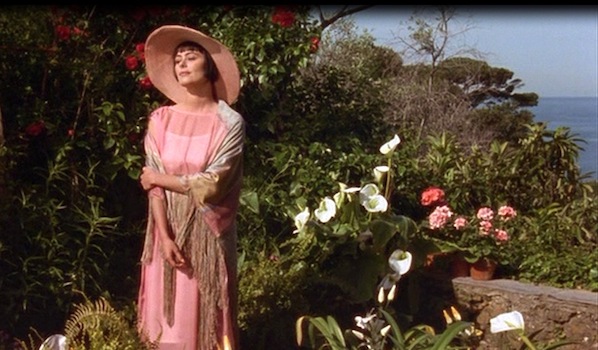
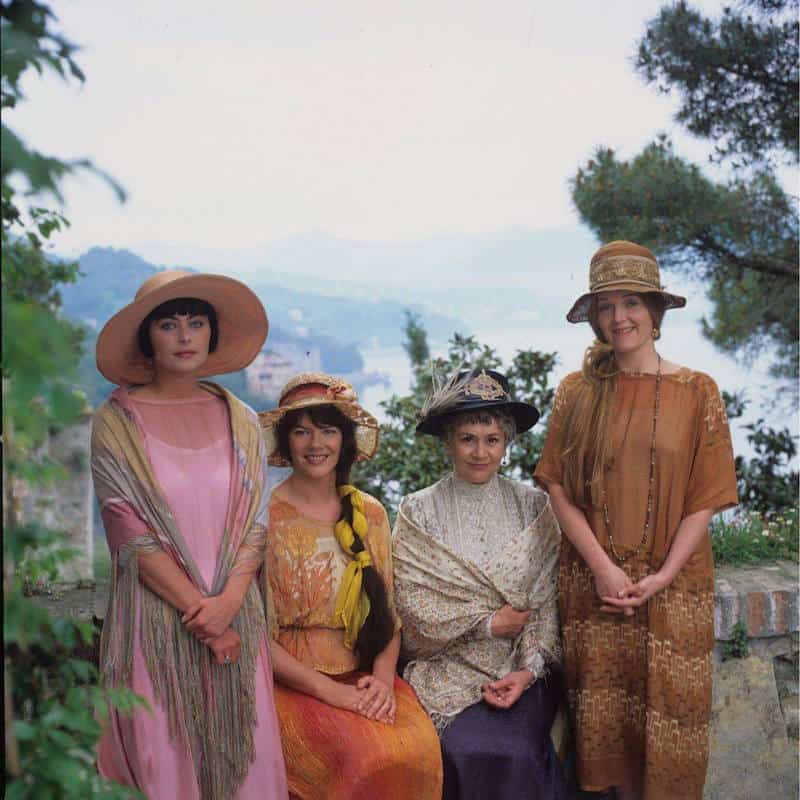
Napier was justifiably nominated for an Oscar for this perfect film about four Englishwomen escaping dreary England for beautiful Italy in the 1920s.
“THE RESEARCH: Napier perused books, newspaper clippings, photographs and clothing in sources such as the Victoria and Albert Museum in London and the Bath Museum of Costumes. THE SOURCES: Many costumes, including the Vionnets worn by Caroline, were rented from London and Paris costume houses. Napier designed all of Lottie’s and Rose’s clothes, always incorporating original lace and trims, and copies of old silks. Even the hats are retrimmed antiques” (Fashion Renewal, Italian Style).

Screen One: “Adam Bede” (1992)
An adaptation of the George Eliot novel, set in 1799, about a love triangle in rural England.


Backbeat (1994)
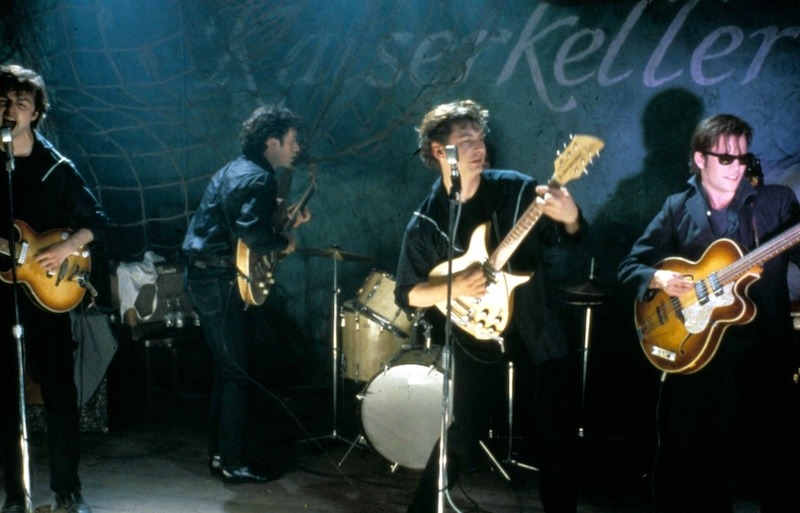
A feature film about The Beatles’ years in Hamburg, Germany.
“INSPIRATION: Conversations with Miss Kirchherr, and books on rockers of the period and on the Beatles’ early days, including “Remember” by Michael McCartney and “How They Became the Beatles” by Gareth L. Pawlowsky. SOURCES: Flea markets in Hamburg and London, period rentals from Carlo Manzi in London. Miss Kirchherr’s suits were custom-made by Ann Maskrey in Derbyshire, England” (Cool Enough to Flip Mop Tops).
The Moth (1997)
A 1913-set Catherine Cookson novel adaptation with an incredibly rambling plot description.

Rag Nymph (1997)
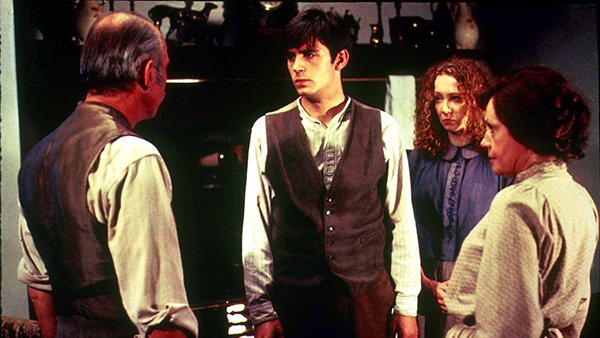
Another Catherine Cookson adaptation, this one set in 1854 Newcastle in which a brothel-keeper’s daughter is adopted by a rag seller.


Ravenous (1999)
“In a remote military outpost in the 19th century, Captain John Boyd and his regiment embark on a rescue mission which takes a dark turn when they are ambushed by a sadistic cannibal” per IMDB.


Durango (1999)
A TV movie: “In 1939 Ireland, a young man decides to lead a forty mile cattle drive rather than selling his cattle to an unscrupulous local buyer” (IMDB).

Cotton Mary (1999)
A film co-directed by Ismail Merchant of Merchant/Ivory fame, set in 1930s?? India.


The Turn of the Screw (1999)
An adaptation of the Henry James ghost story about a governess; this version is set in the 1840s.


The Heart of Me (2002)
Sisters in 1930s London who love the same man.


Wah-Wah (2005)
A 1960s-set film that’s a loose adaptation of Richard E. Grant’s childhood in Swaziland.


Ballet Shoes (2007)
A BBC adaptation of the 1936 Noel Streatfield book, in which three orphaned sisters study and perform in ballet, theater, and film in London.
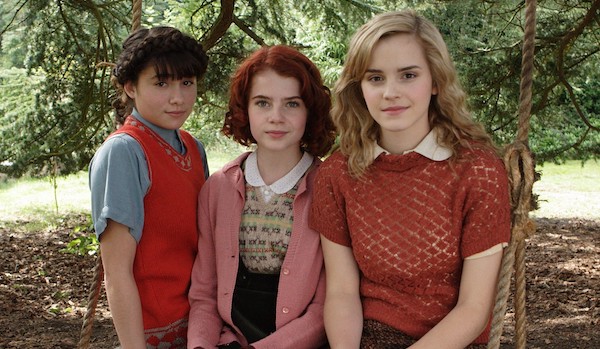


Parade’s End (2012)
Stunning costumes that earned Napier a BAFTA for a terribly depressing story about a love triangle during World War I.


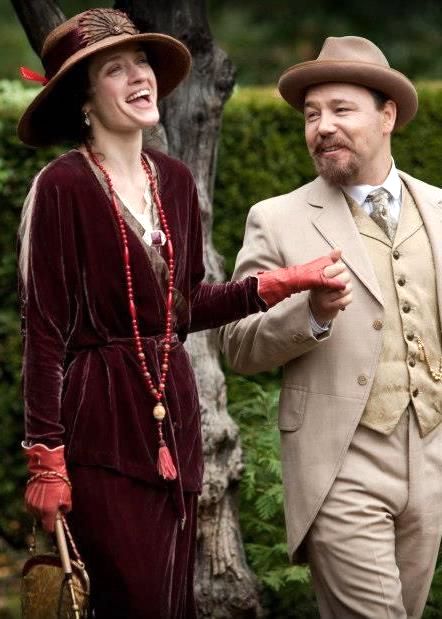

The Village (season 1, 2013)
“Residents of one English village across the 20th century and their turbulent lives” (IMDB).


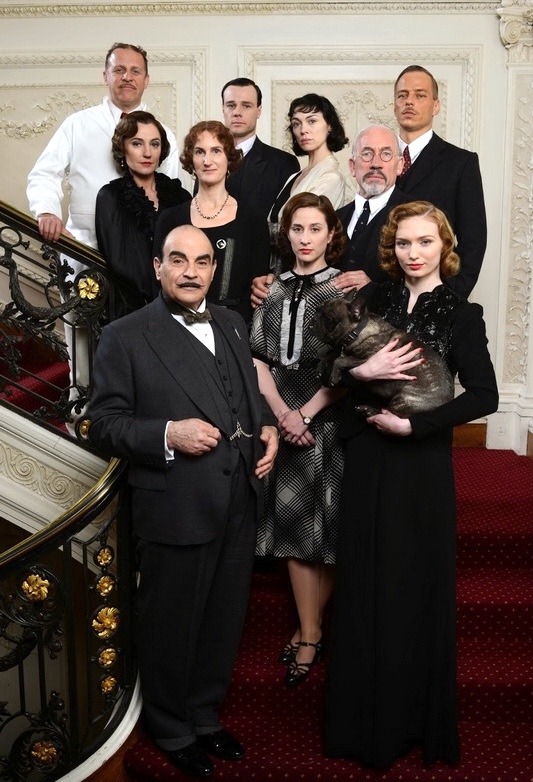
Poirot (seasons 9-13, 2003-13)
Napier costumed MANY episodes of this iconic 1930s-set Agatha Christie mystery series, so many of which are iconic enough that I’m including many images from specific episodes!
“In Sheena’s trailer there are boxes and boxes of shoes, jewellery, handbags, hats and gloves in every conceivable colour. But for this final quartet of films, the pieces are a little later in date. ‘We are now in the 30s, going towards the 40s,’ she says. ‘Poirot‘s personal style remains that of an earlier time, but most of the female characters have moved on from the drop waists of the flapper period to fuller skirts and waisted styles'” (Poirot’s last case: After 25 years his detective days are numbered).

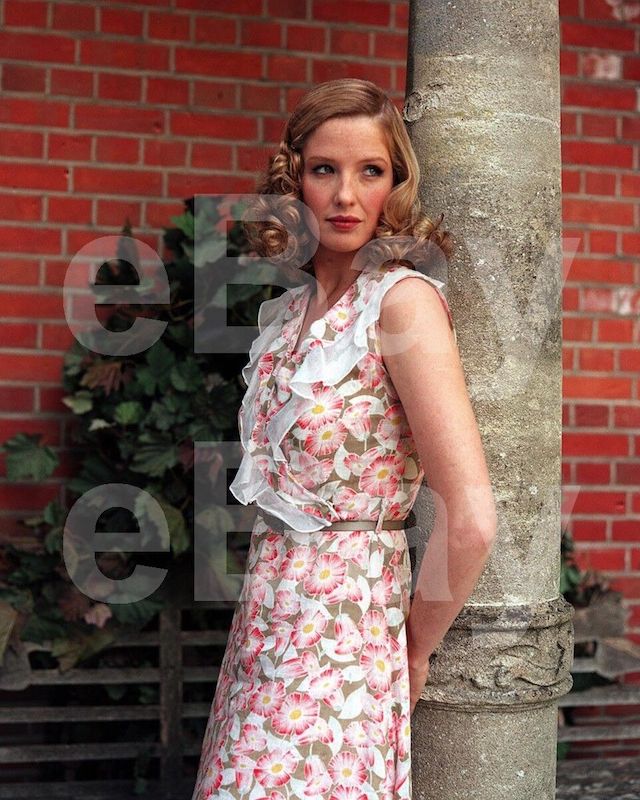


Marple (seasons 3 & 5-6, 2007, 2010-13)
In between Poirot’s, she also did many memorable episodes of the OTHER Agatha Christie mystery series, this one set in the 1950s.
“After 20 years as a costume designer, including four for the television series of Agatha Christie’s 1930s legacy Poirot and two for Miss Marple, Napier has accumulated a vast archive of genuine vintage treasures. ‘But, they’re getting harder to find,’ she says. Many originals, she says, are now doctored or remodelled into new garments by resourceful fashion hounds. ‘It breaks my heart; I have to rescue things before they get cut up'” (Janie Breen Burns, Nov. 12, 2010, “Klepto Chic that Hits the Target,” The Age 20).


The Great Fire (2014)
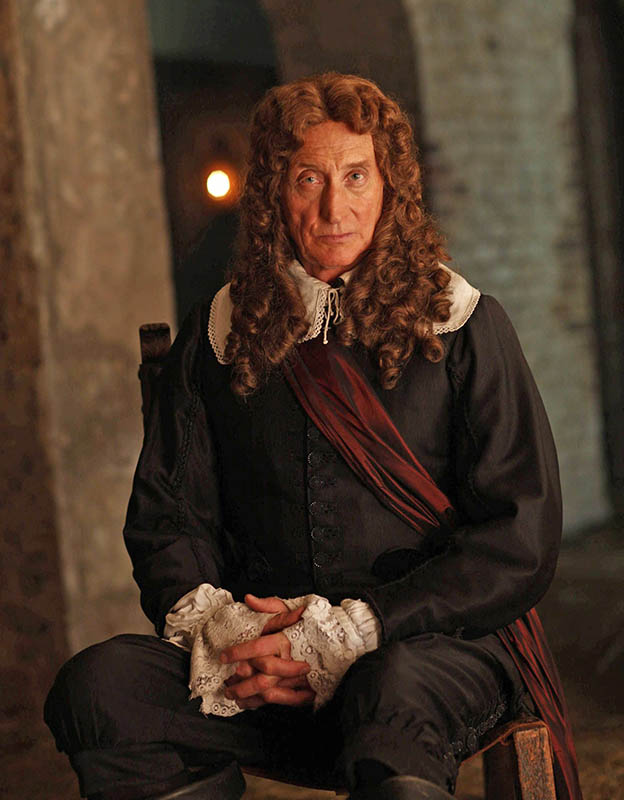
A miniseries about the 1666 fire in London, showing how people of different classes were effected, that Trystan calls “mediocre” although noting “semi-decent costuming (though a shocking lack of headgear).”




Galavant (2nd half of season 1, all of season 2, 2015-16)
A fairytale-set musical comedy TV series. Let’s blame the initial costume designer who set the tone?


Howards End (2017-18)
The more recent adaptation of the E.M. Forster novel, about two bohemian sisters in 1910s London and “social conventions, codes of conduct and relationships” (per Wikipedia). Napier was nominated for an Emmy for her work.
“Sheena Napier, who designed the costumes, was determined that they should be socioeconomically plausible – you see the same skirt with different blouses, and the clothes are never unduly fussy. Yet they indicate each character tellingly: Helen wears floor-length skirts in jewel tones or loose bohemian dresses; Margaret’s wardrobe becomes increasingly somber as her responsibilities encroach” (Gaby Wood, “V Life: Television: Connecting the Dots.” Vogue, Apr 01, 2018, 126-126, 127, 226).


The Buccaneers (second half of season 1, 2023)
Once again, Napier took over for another designer on the recent, terrible adaptation of the 1870s-set Edith Wharton novel about American nouveau riche finding love in England.


Which is your favorite of Sheena Napier’s many historical film and TV designs?


My favorite is “By the sword devided”. Loved the actors, sets and costumes – especially if you compare it with contemporary productions…
I love that period & wish this show was easily findable!
God, The Village made Parade’s End seem like a lighthearted romp. Just relentless misery porn–nothing good ever happened to anyone. Nice costumes, but uggghhhhh.
Nooooooo!!!
‘Allo! ‘Allo! is most definitely a comedy, which plays on national stereotypes (of everyone; the British have stiff upper lips, the French are horny, the Germans are loud and efficient, the Italians are flamboyant) and what Monty Python would call “outrageous accents”. If I remember correctly, it started as a parody of a serious series about the French Resistance during WW2 (Secret War?).
The show was well-known for its recurring catchphrases (“Listen very carefully, I will say this only once”, “It is I, Leclerc!”, “You stupid woman!”, etc.) and long-running plot elements (the painting of the Fallen Madonna “with the big boobies”, the British airmen being hidden from the Germans, the gormless French leading man being fought over by various women, etc.).
(Leesen vairy carefally, I vill zay zees only vunce!) “Allo ‘Allo!” is a wondrous farce; our girl’s ex- introduced her to it, and then suddenly we were all watching. Tasteless in the best Brit tradition. (I enjoy Herr Otto Flick, the kinky young German officer.)
Good Moaning!
Napier deserves many more awards, especially for those 17th-century and WWI costumes. I didn’t find “Parade’s End” at all depressing because I was so entranced by the character’s wardrobes.
I have tried twice to watch By the Sword Divided twice since i used to live about 15 minutes from Liford Hall, where it was filmed. Unfortunately, the versions i have youtube are just so poor, with the sound being a particular problem. Too bad since i love the period.